Architects: Abel Chamberlin, Alejandro Gonzalez, Daniela Maestre, Jatin Nimmala, Mariana CantuThe project presented the challenge of relocating an existing project to a new climate. The goal is to understand construction techniques and changes in material use across locations, cultural contexts, and climates. Over the following weeks, students met with ARUP professionals to discuss construction and structural strategies based on their new site.
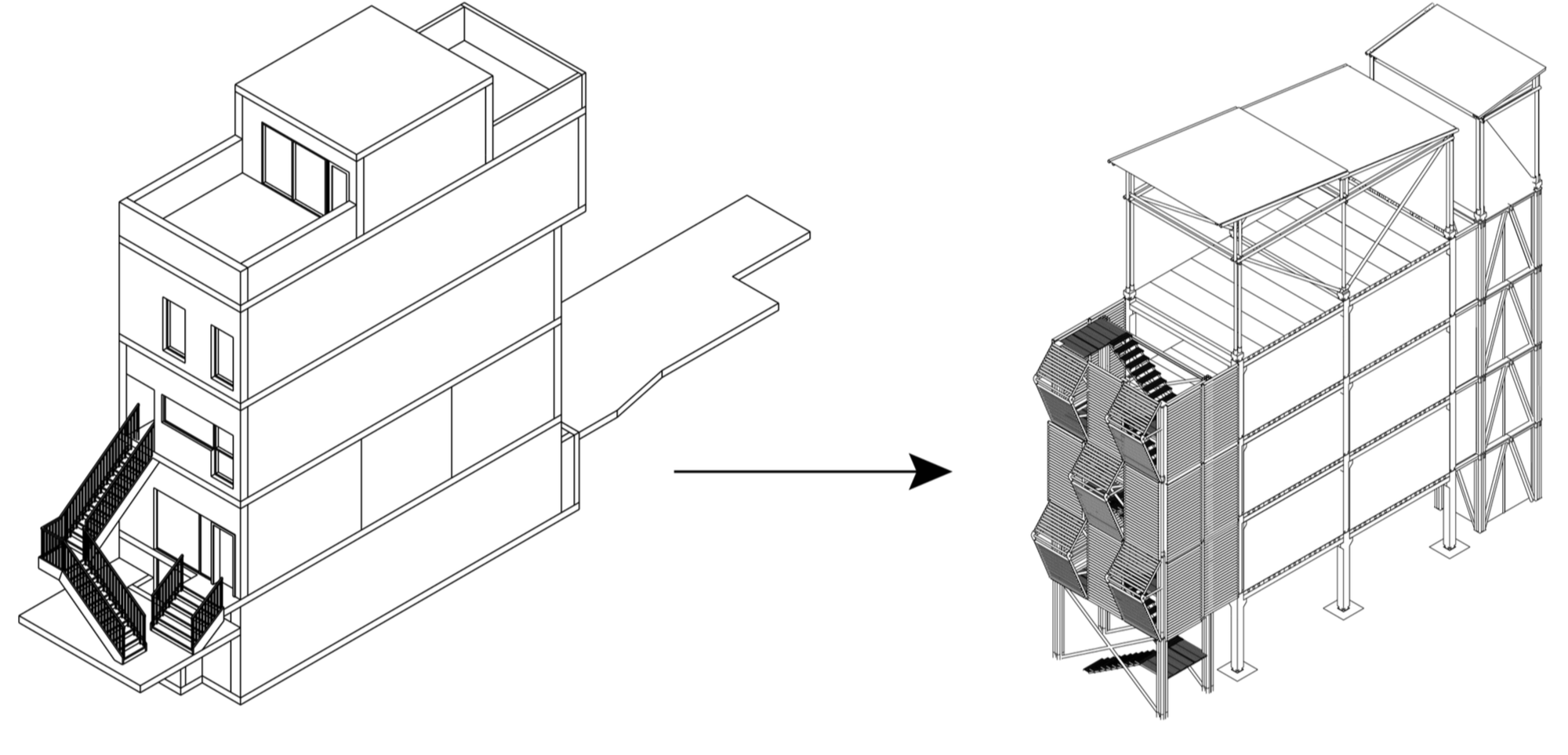
From Montreal, Canada to Kolkata, IndiaCLIMATE VARIATION: From Montreal to Kolkata
Montreal has a cold continental climate with long, freezing winters, heavy snowfall, and mild to warm summers. Kolkata, by contrast, has a tropical wet-and-dry (monsoon) climate, with very hot, humid summers, a dominant monsoon season, and mild winters. Overall, Kolkata is much warmer and more humid year-round, while Montreal experiences extreme seasonal variation.
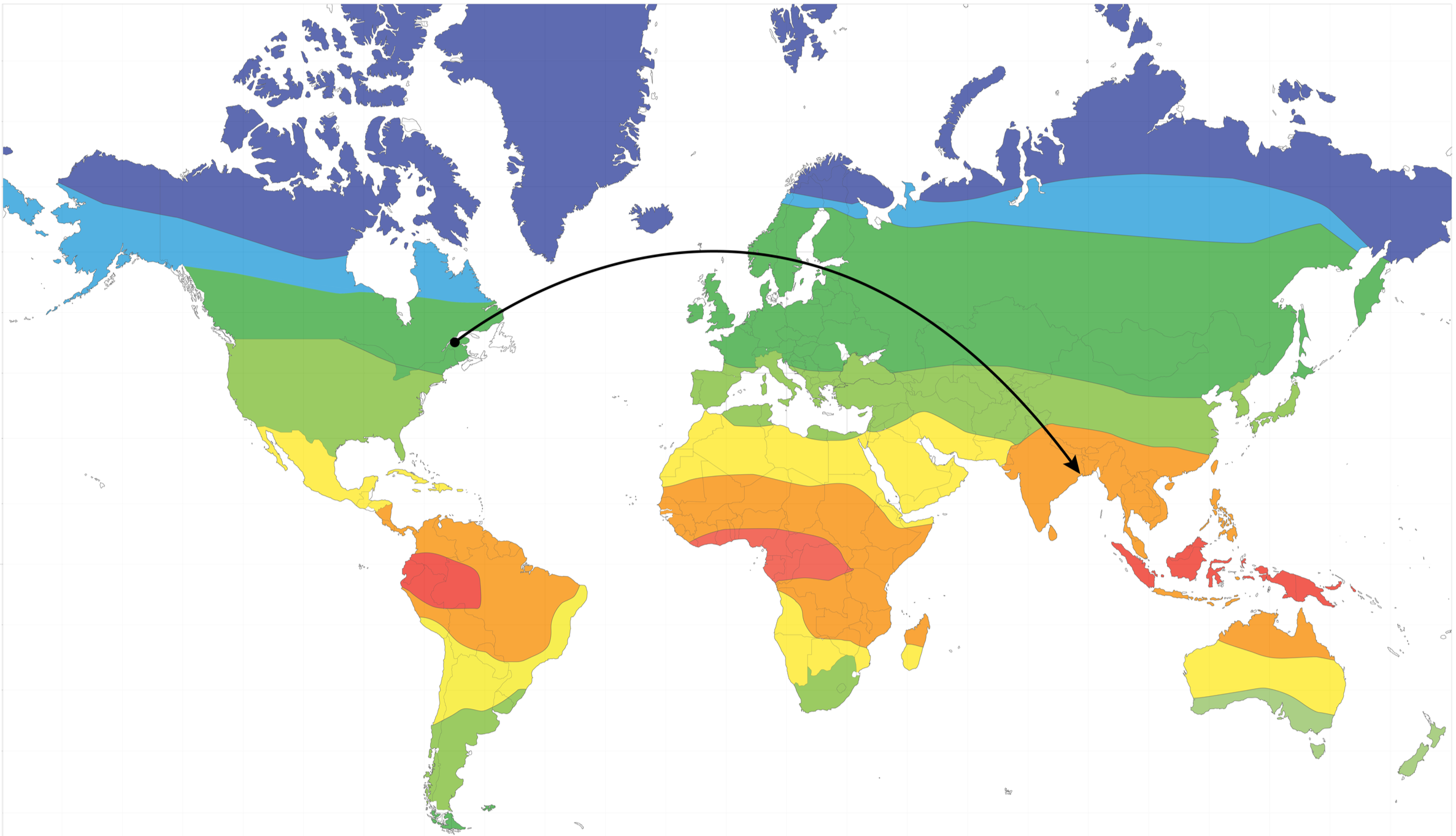
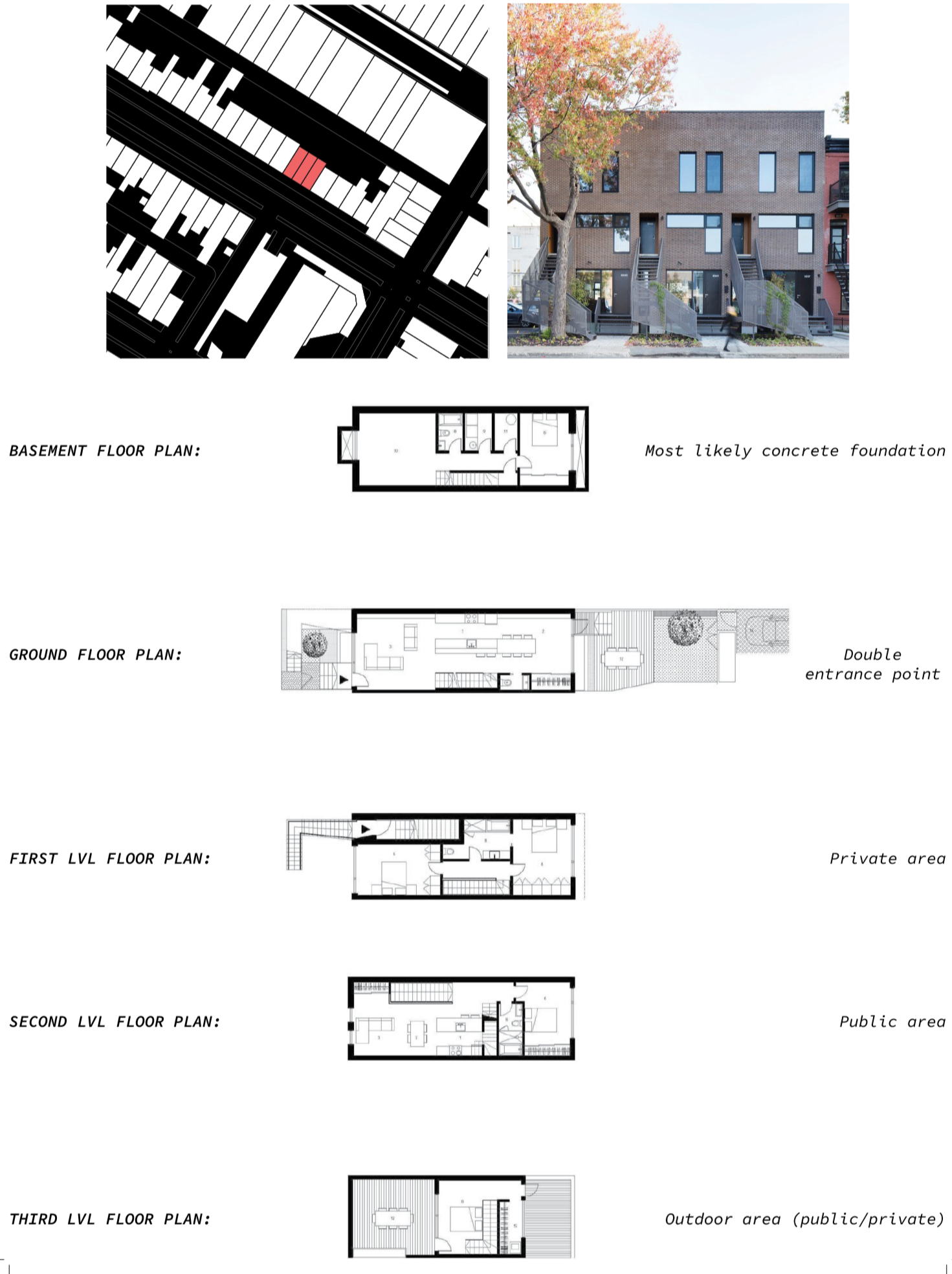
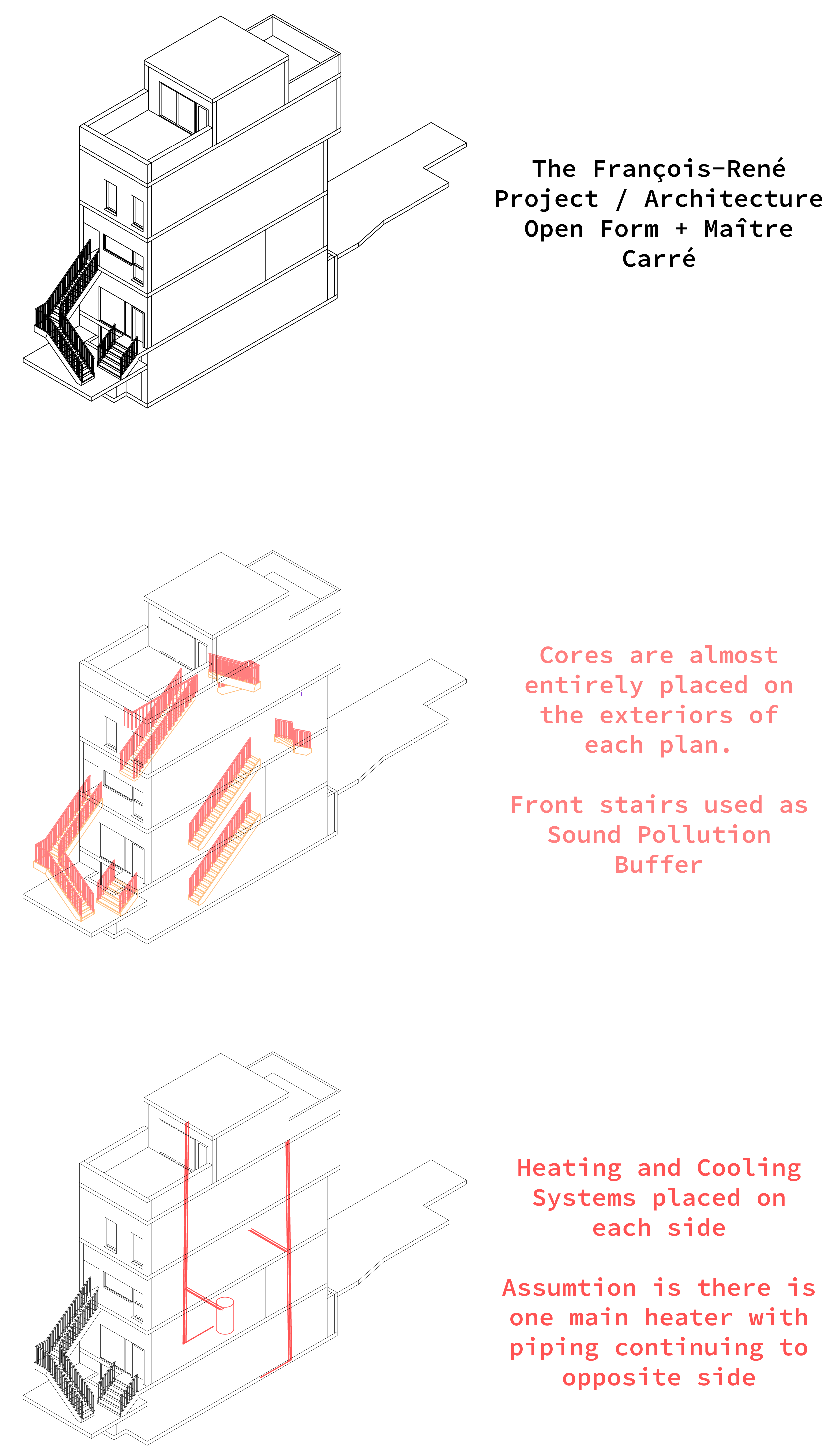
Climate zoning map from Montreal to KolkataExisting Site in Montreal: Structural and Service Understanding
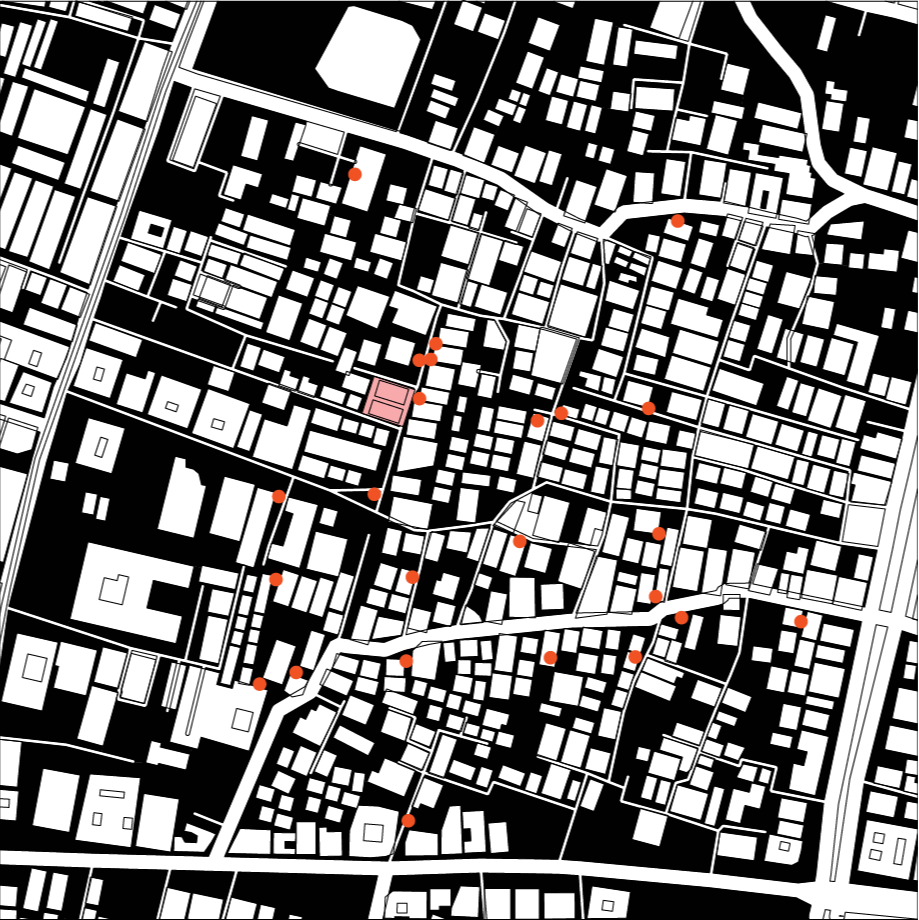
SONOGACHI, KOLKATA: Understanding our Neighborhood
While analyzing the Sonagachi neighborhood, we found that many plots are similar in size. With this being said, many of the buildings are in poor condition and could be used for a reuse project. The idea is to take the existing structures and plots to add our prefab units. If the building is in too bad condition, we will recycle the bricks for a new development.

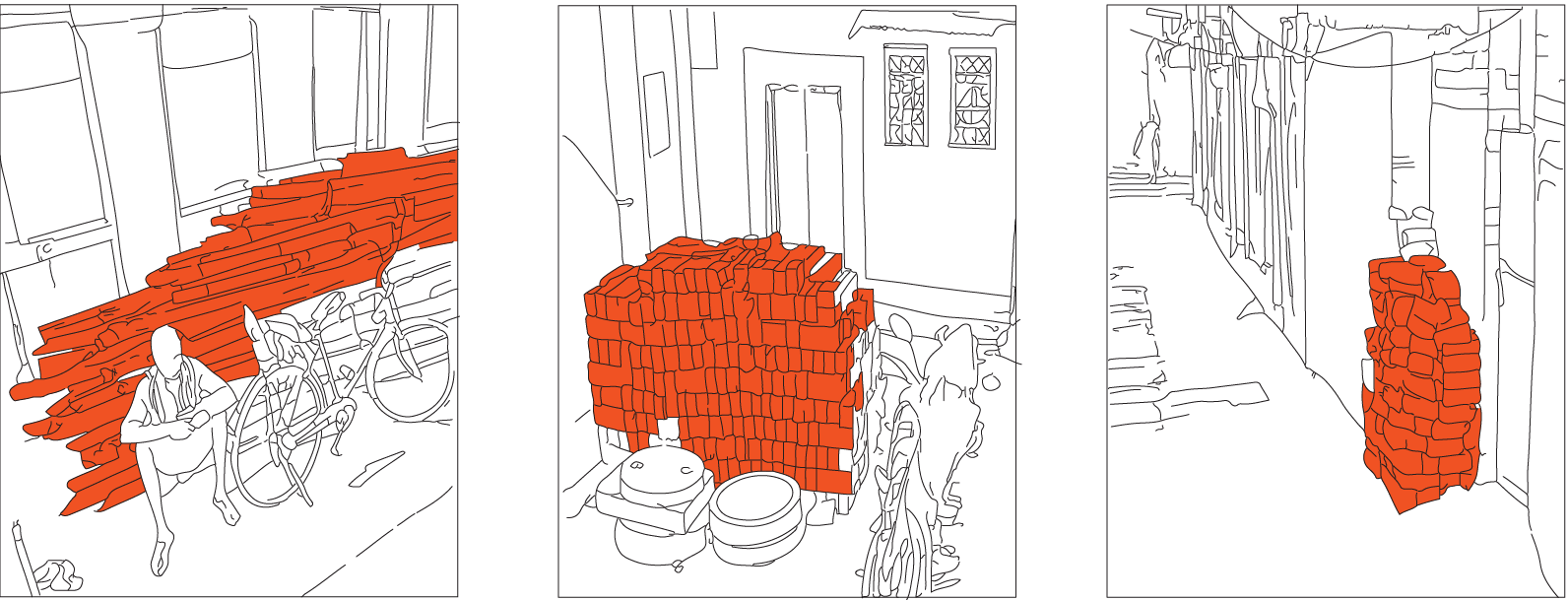
URBAN MINING IN SONOGACHI:
Upon looking around the neighborhood, we also found unused bricks and bamboo that could be used for the new developments. Additionally, we analyzed street widths to ensure a truck could access the site to transport these materials.

MASSING: Structural Understanding
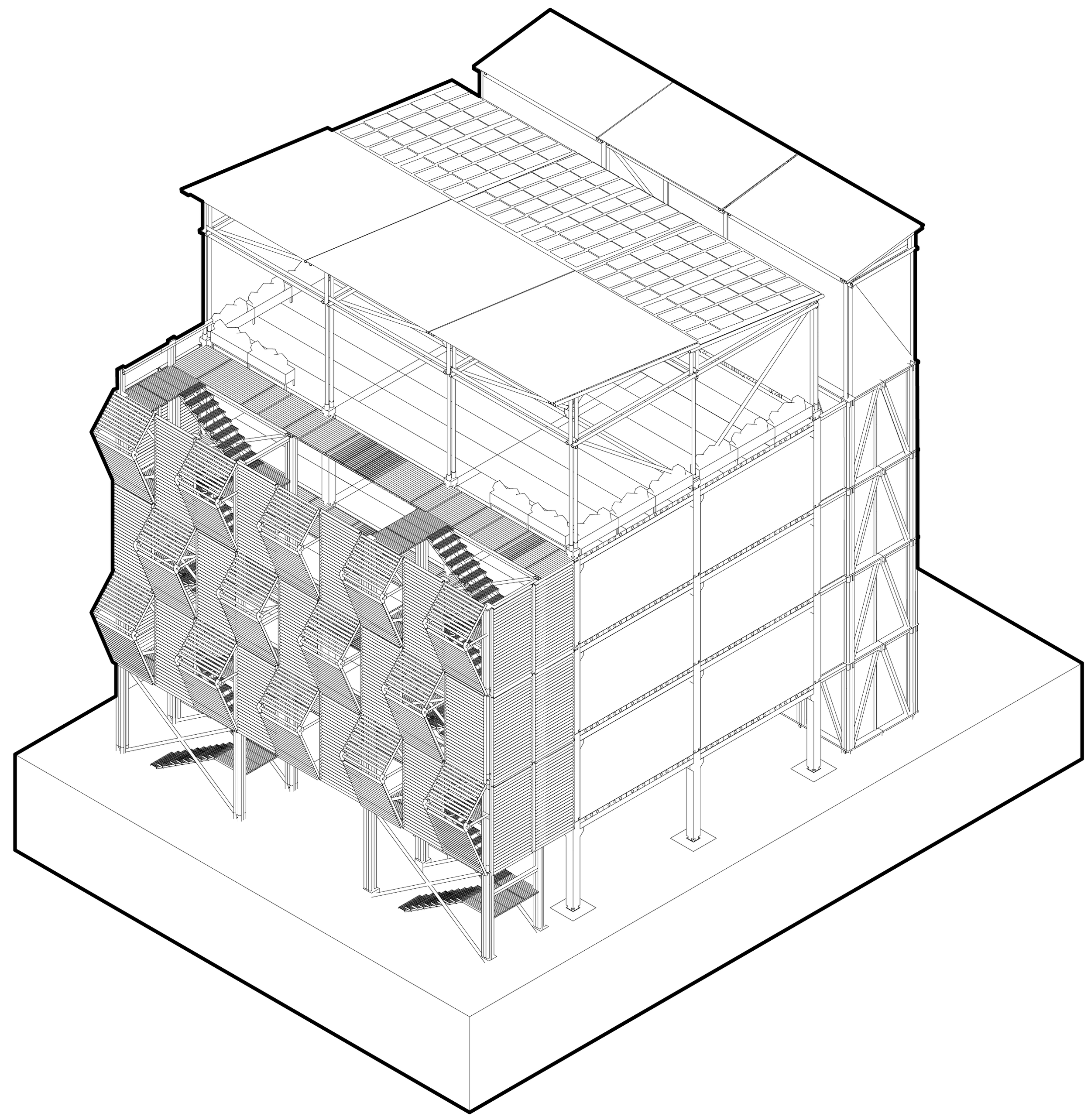
NEW MASS
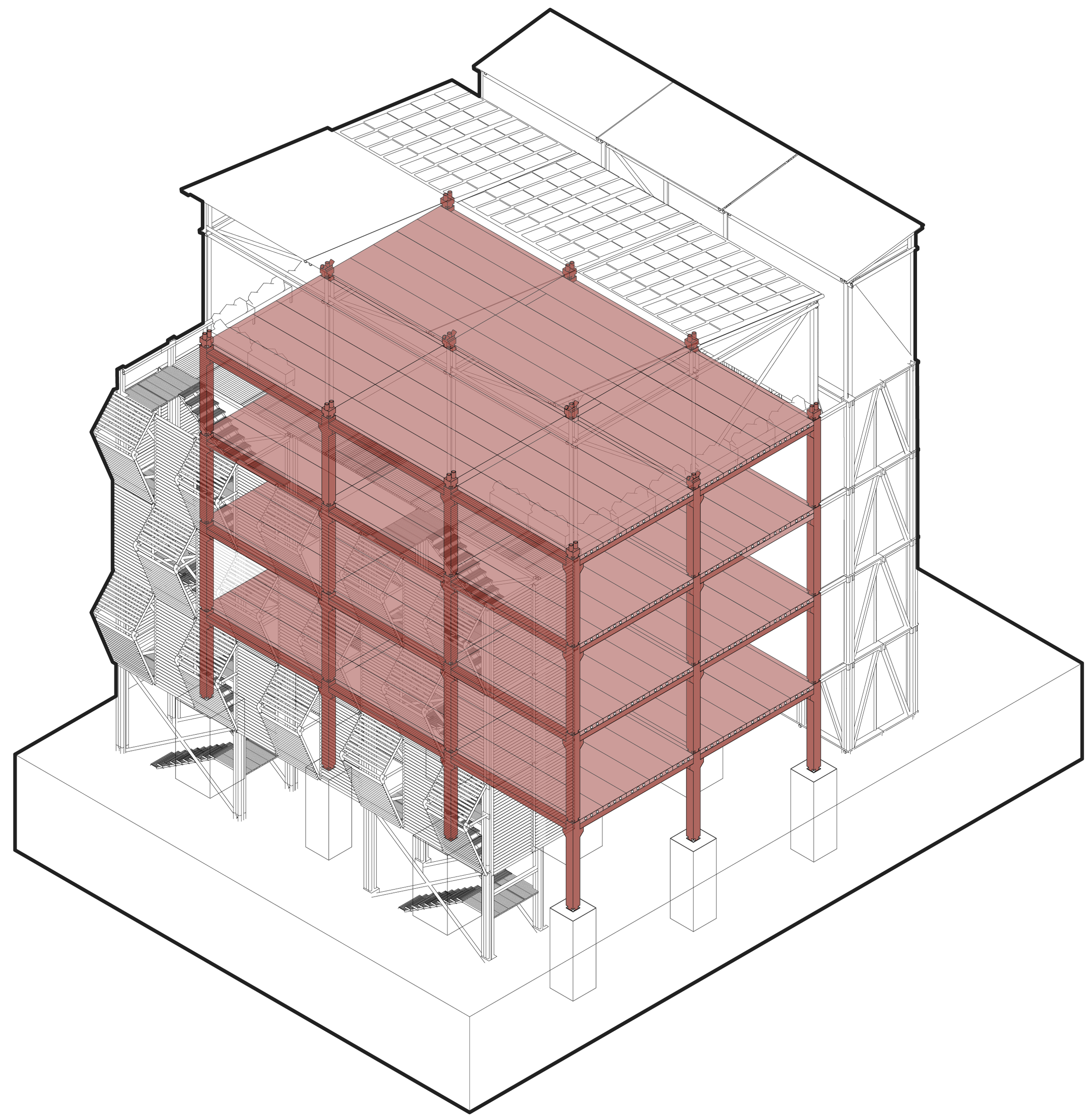
CONCRETE STRUCTURE
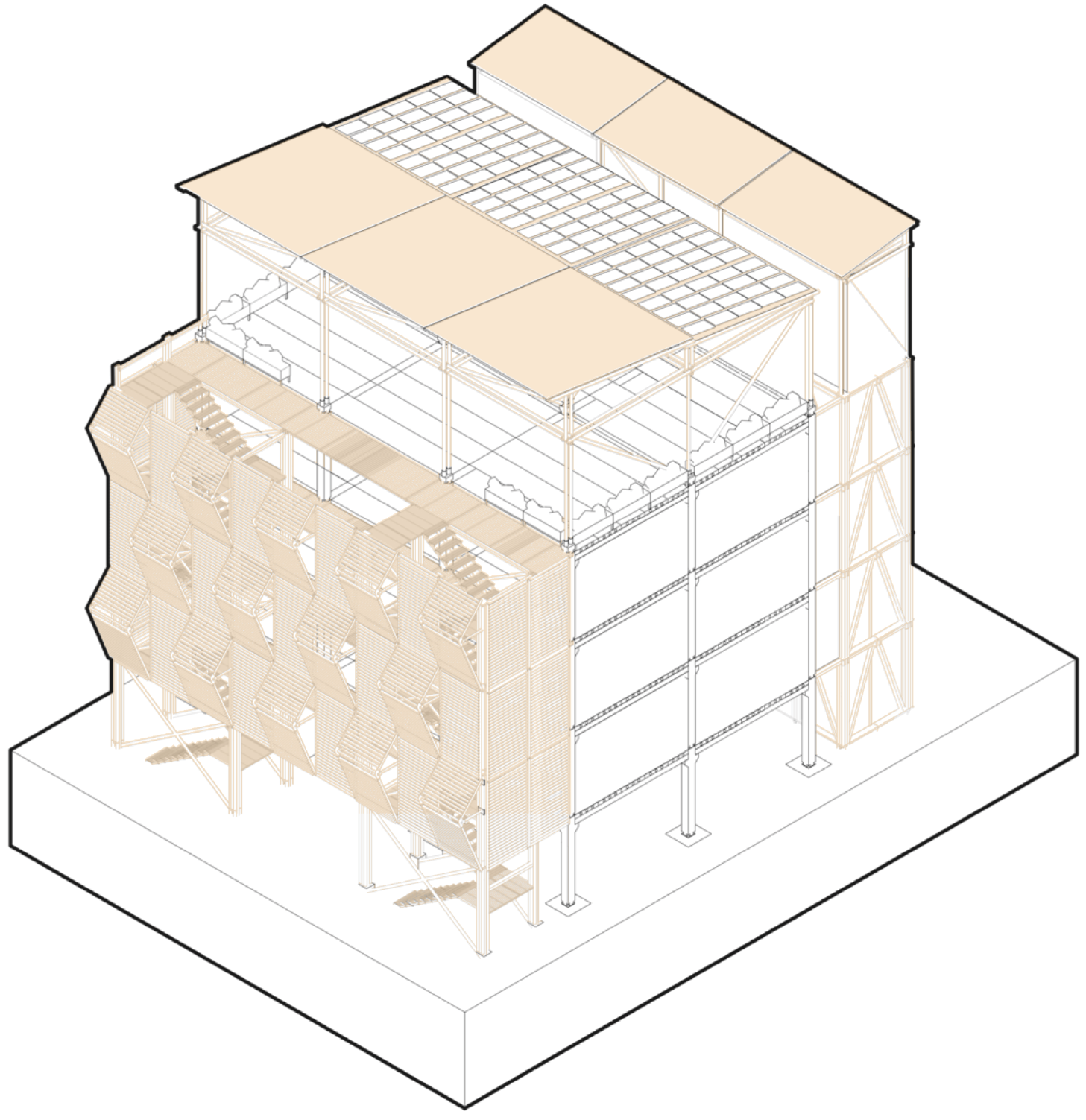
BAMBOO SHELL
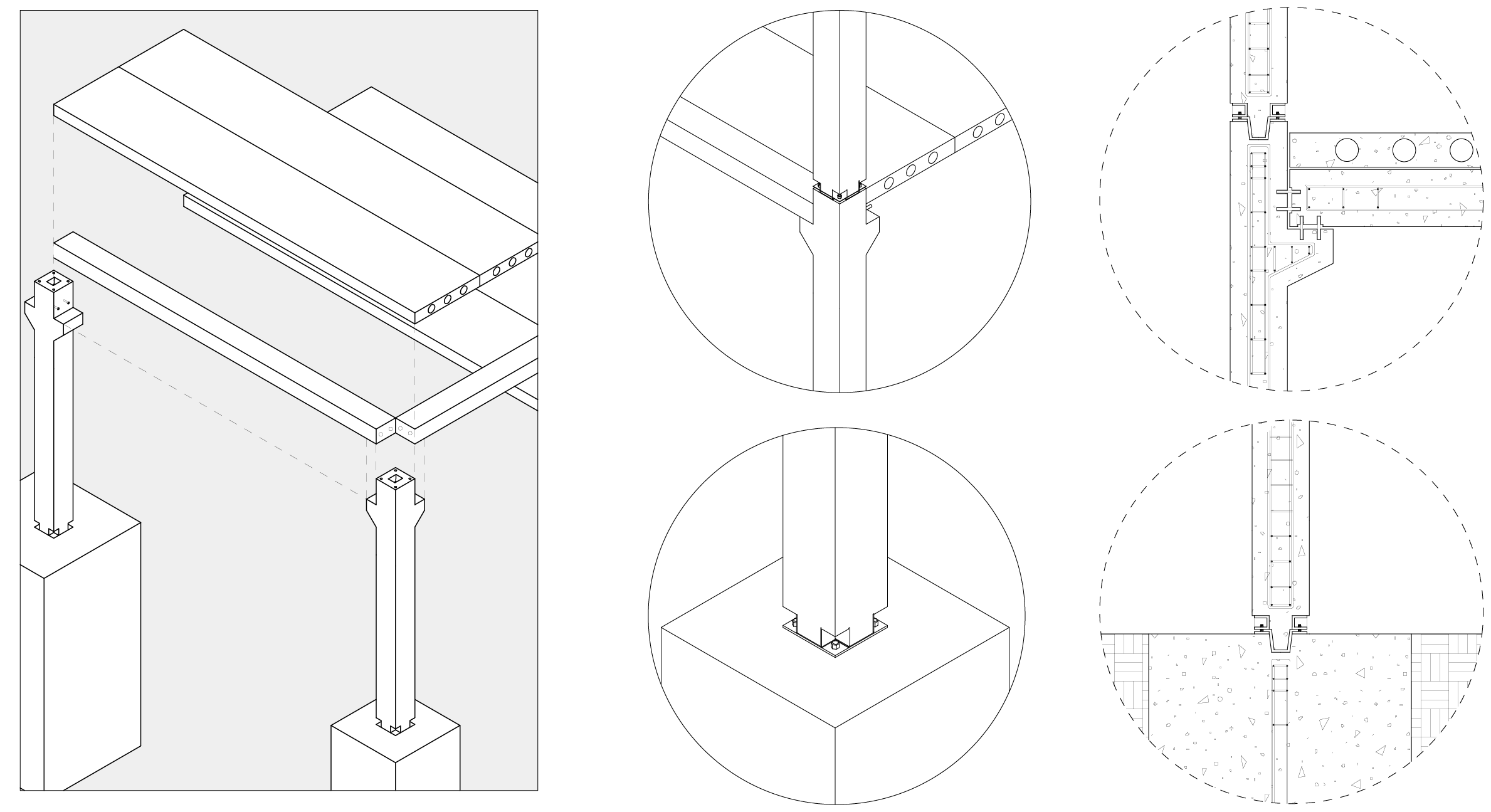
CONCRETE STRUCTURE:
To minimize concrete use while maintaining a structural unit, we used precast modules with moment connections. The use of modules enabled the development of buildings on smaller or larger sites as needed.
This type of structure also ensures the project can be deconstructed without too much trouble. Meaning pieces can be recycled or reused elsewhere.
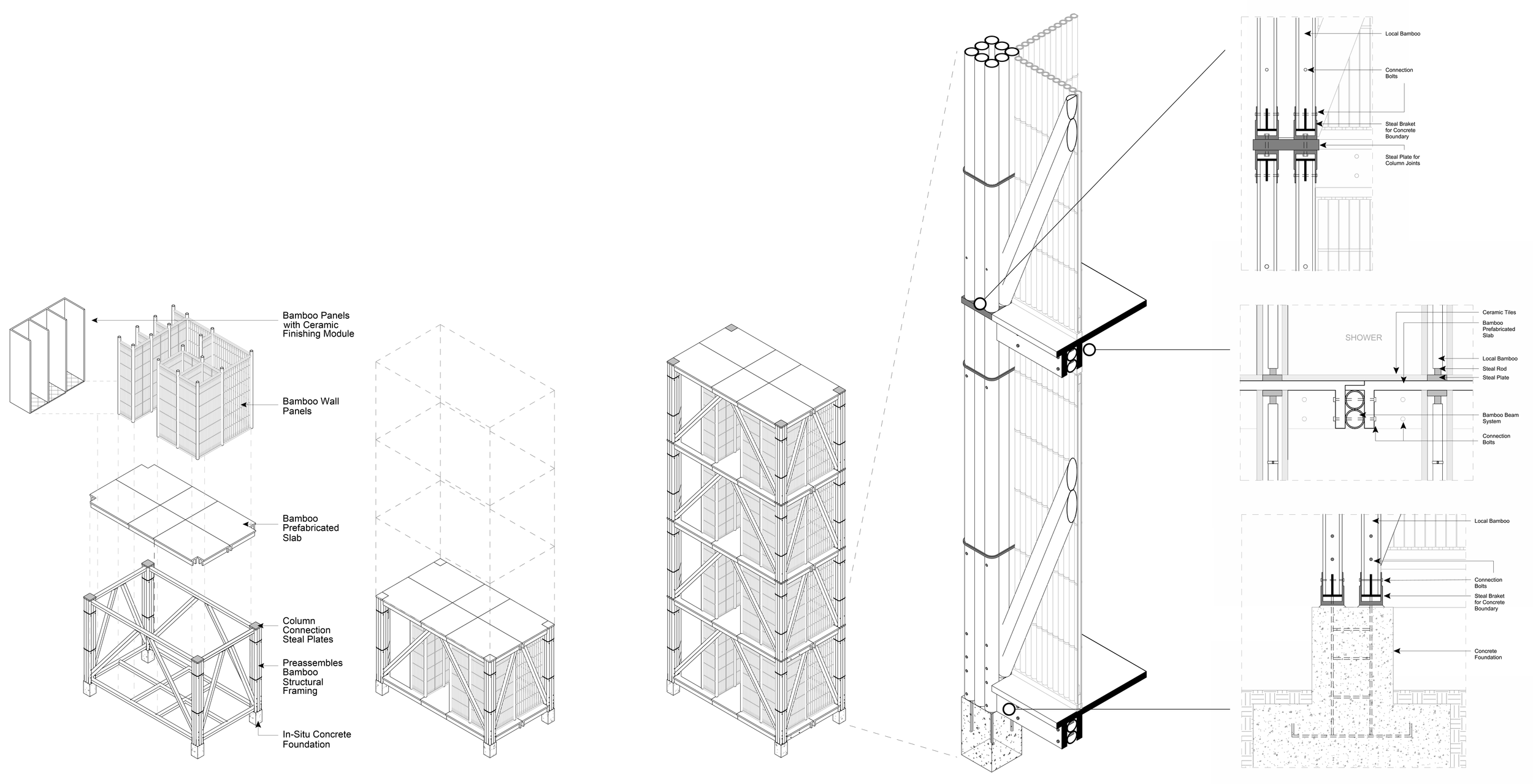
BAMBOO SHELL: Modular Services
In the hope of continuing the modular aspect of the design, we looked into producing the service units from local bamboo. With ARUP, we developed a structural system for stacked bamboo, enabling the building's services to be easily transported to the site.
FLOOR PLANS: Changes from the Original to the New
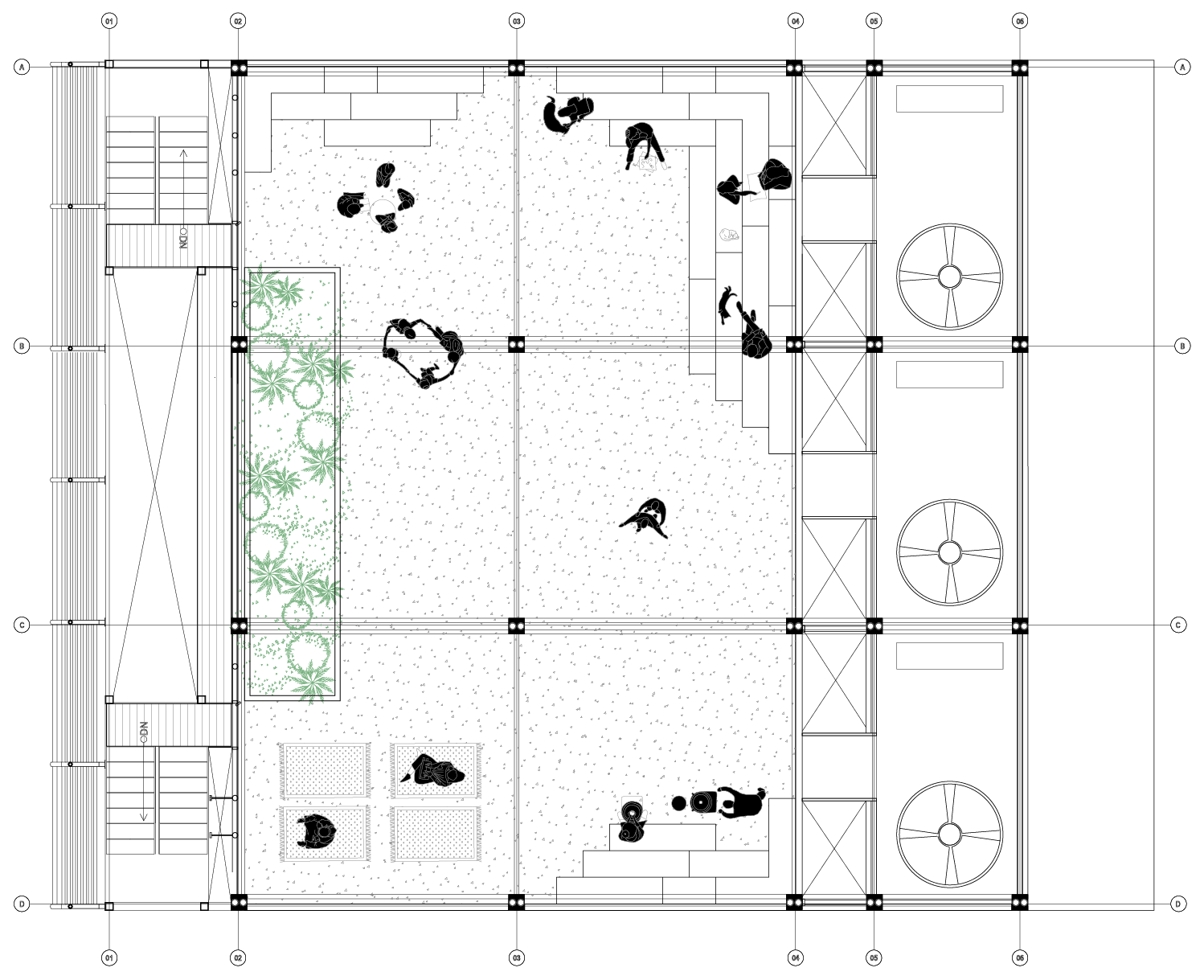
The changes to the plan were almost entirely based on Kolkata's cultural norms. When speaking with a classmate from a region near Kolkata, they mentioned that it is common to eat in large groups on the floor to stay connected. This meant changing from a closed floor plan to an open one was beneficial to the user and us. Minimizing the need for extra building materials and embracing local traditions.
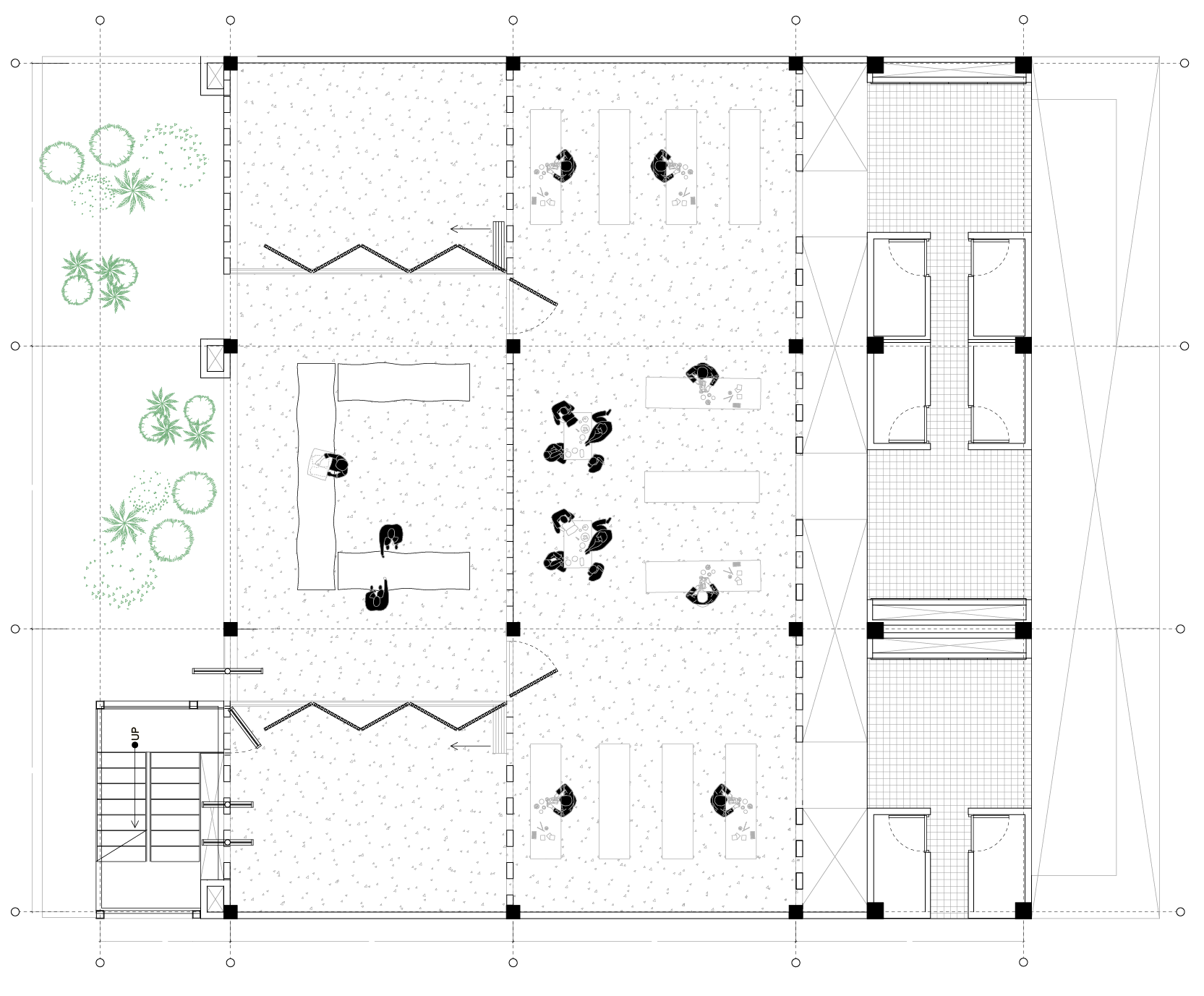
Ground Level: For Selling Textiles/Goods
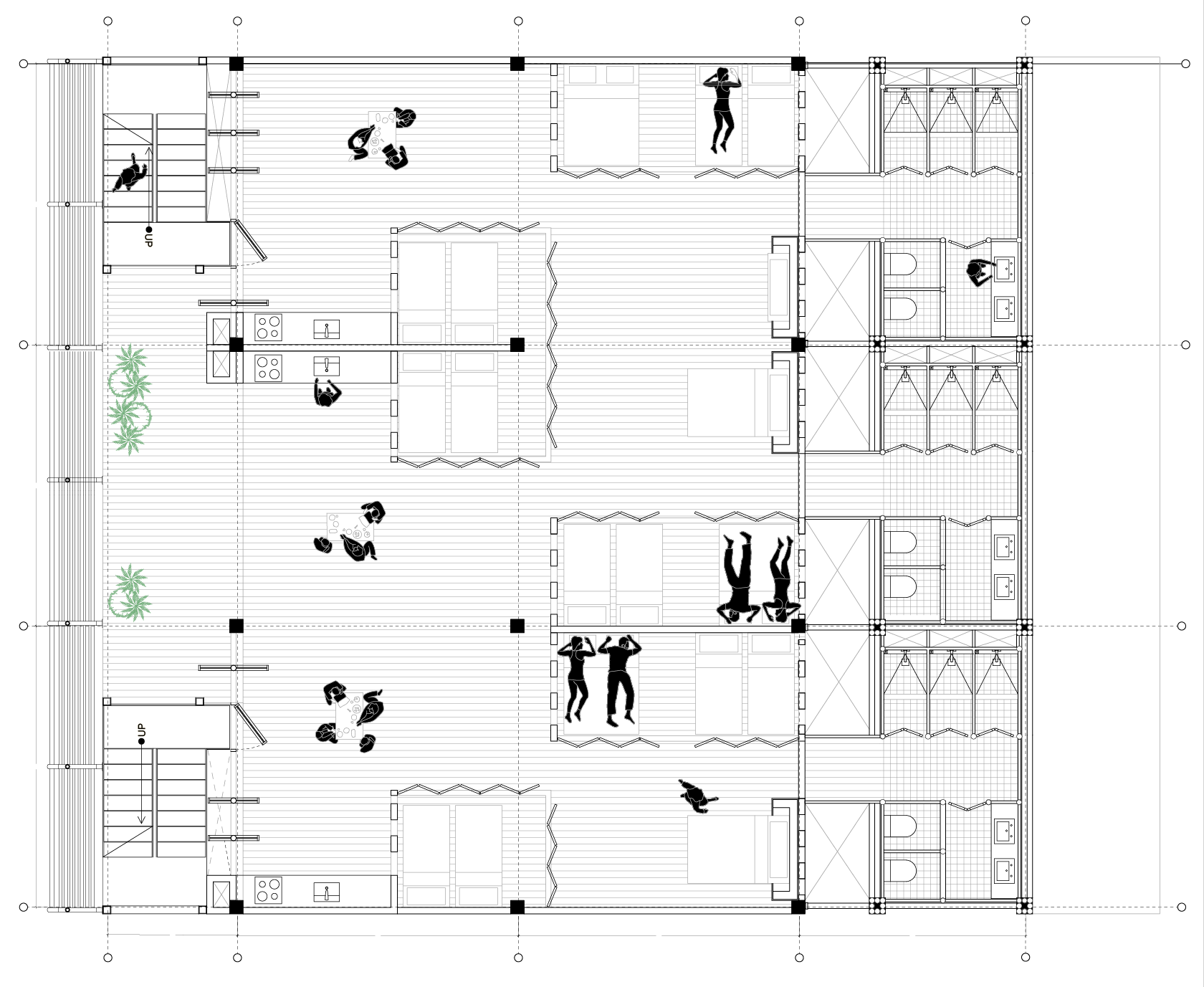
Common Level (1-3): For Housing, More Private
Top Level (4): Private/Public Area for Occupants/Services